Tree Trimming vs Pruning for Austin Homes
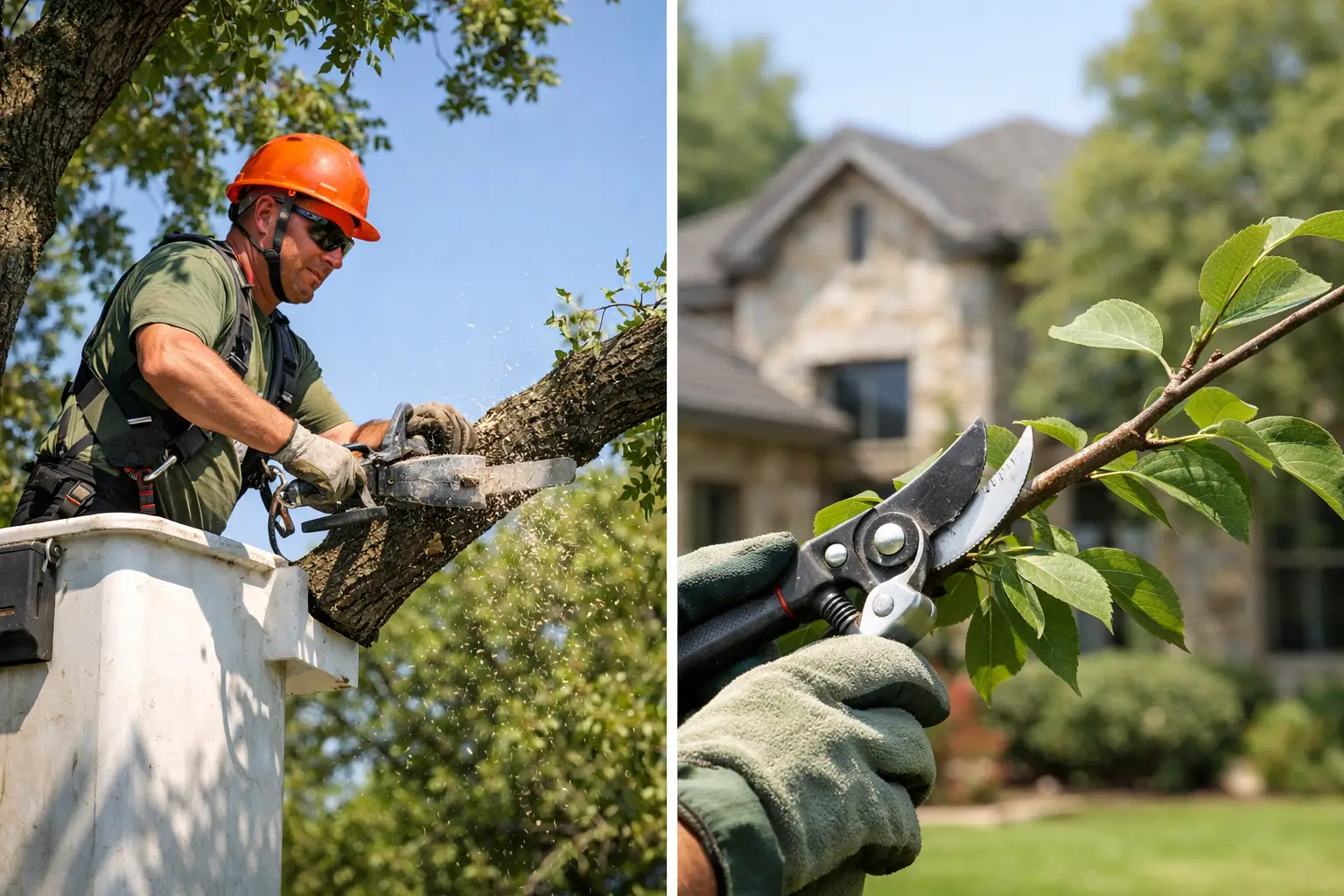
A live oak rubbing your roof, cedar elm branches hanging over the driveway, or a canopy swallowing the front of your house all call for attention. But tree trimming vs pruning is not just a matter of using two different names for the same job. The goal, timing, and cuts involved can be very different, especially when your tree is close to a home, fence, pool, or power line.
For Austin homeowners, the right service protects more than curb appeal. It can reduce storm damage, keep limbs off the roof, improve tree health, and help prevent an expensive surprise during the next high-wind storm. Here is how to tell what your property needs.
Tree Trimming vs Pruning: The Main Difference
Tree trimming is generally about managing a tree’s size, shape, and clearance. It is the service homeowners often need when branches are growing into a roofline, blocking a walkway, brushing a fence, crowding a driveway, or reaching toward utility lines. A good trimming job makes the canopy more manageable without stripping the tree or leaving it lopsided.
Tree pruning is more focused on the condition and long-term structure of the tree. It involves selectively removing dead, diseased, broken, crossing, weak, or poorly attached branches. Pruning can also improve air movement and reduce the load on heavy limbs that are more likely to fail in wind or rain.
There is overlap. A crew may trim a low limb for roof clearance and prune out deadwood in the same visit. The difference is the reason for each cut. Trimming solves space and clearance problems. Pruning solves health, safety, and structural problems.
When Tree Trimming Is the Better Fit
Trimming is usually the right call when a healthy tree has simply outgrown its space. In established Austin neighborhoods, trees often sit close to homes, patios, detached garages, and shared fences. Waiting too long can turn a routine job into a more complicated removal of large limbs over a structure.
You may need trimming if branches are touching or nearly touching your roof, scraping siding, covering exterior lights, blocking security camera views, or dropping leaves and small branches into a pool. Low branches that interfere with mowing, parking, or walking under the tree are also common trimming concerns.
Canopy reduction may be appropriate for certain trees, but it needs to be done carefully. Proper reduction uses selective cuts back to suitable lateral branches. It is not the same as topping a tree. Topping leaves large wounds, weak regrowth, and a stressed-looking canopy. It may seem like a fast way to make a tree smaller, but it often creates more risk and expense down the road.
A professional trimming plan also considers what is below the branches. A limb over open lawn is one thing. A limb over a tile roof, glass patio door, fence, or narrow side yard needs controlled lowering and careful rigging. The work should be planned around protecting the property, not just getting branches on the ground quickly.
When Your Tree Needs Pruning Instead
Pruning is the better choice when the tree is sending clear signals that something is wrong or structurally weak. Dead branches are the most obvious sign. They may have no leaves during the growing season, loose bark, cracking wood, or broken ends. Deadwood can fall without much warning, particularly after drought stress, heavy rain, or high winds.
Look for branches that cross and rub against each other, especially within the center of the canopy. Over time, that friction creates wounds that invite decay and insects. Narrow branch unions are another concern. If two major stems grow together in a tight V shape with bark pressed between them, the connection may be weaker than it looks.
Pruning is also useful after a storm. A branch can remain attached while being split, cracked, or partially torn from the trunk. From the ground, it may look stable. Up close, the wood fibers may be damaged enough that the limb could fail later. Removing the damaged section cleanly can prevent a bigger break and reduce the chance of decay spreading into healthy wood.
The quality of the cut matters. Branches should be removed near the branch collar, the slightly swollen area where the branch joins the trunk or larger limb. Cutting too flush can damage the tree’s natural defense zone. Leaving a long stub can slow closure and encourage decay. This is not cosmetic detail. It affects how well the tree responds after the work is done.
The Right Timing Depends on the Tree
There is no single calendar date that works for every tree on every property. Storm damage and hazardous hanging limbs should be handled promptly whenever they appear. Roof clearance and deadwood removal also should not wait if a branch poses a real safety risk.
For routine work, tree species and weather conditions matter. In Central Texas, oak wilt prevention deserves special attention. Whenever possible, avoid pruning oaks from February through June, when disease-spreading beetles are most active. If an oak must be cut because of damage or an immediate hazard, the fresh wound should be painted right away and tools should be handled properly between trees.
Late fall and winter are often good times to assess a tree’s structure because the canopy is easier to see. That said, healthy maintenance does not always need to wait for winter. The best schedule depends on the tree’s species, condition, location, and the specific problem you are trying to solve.
How Much Should Be Removed?
More cutting does not mean better tree care. Removing too much live canopy at once can stress the tree, trigger weak sucker growth, and leave branches exposed to harsh Texas sun. A tree that looks “cleaned out” from the driveway may actually have been over-pruned.
A careful crew removes what needs to go and leaves what supports the tree. That can mean deadwood removal, selective thinning, clearance over the roof, and reduction of one overextended limb rather than removing large sections of the canopy. The result should look natural. You should not be able to spot every cut from across the street.
It also depends on the tree’s age and condition. A young tree may benefit from structural pruning that encourages well-spaced permanent limbs. A mature shade tree may need a lighter touch, focused on safety and preserving the canopy it has spent decades building. A stressed tree dealing with drought, root damage, or disease may need a different plan than a vigorous tree in open lawn.
What a Safe Residential Tree Job Should Include
Tree work near a house is not a place for guesswork. Before work starts, the crew should identify hazards, including overhead lines, fragile landscaping, roof access, fence lines, and where branches can safely be lowered. Large limbs should be tied off and controlled when there is a chance they could strike the home, driveway, or neighboring property.
Homeowners should also expect straight answers about what can and cannot be done safely. A branch tangled in a service line, for example, may require the utility company rather than a tree crew. A responsible company will not take shortcuts around electrical hazards just to finish a job faster.
Cleanup matters, too. Trimming and pruning can create a surprising amount of brush, sawdust, and small debris. Full cleanup should include hauling away cut material and leaving the work area tidy, not piling branches at the curb for the homeowner to deal with later.
A Simple Way to Decide What You Need
If your main concern is space, clearance, visibility, or appearance, start with tree trimming. If your concern is deadwood, broken limbs, crossing branches, disease signs, or the stability of a heavy limb, pruning is likely the priority. In many cases, the best job includes both.
When requesting an estimate, point out the branches that worry you most and explain what sits underneath them. Mention roof contact, fence pressure, pool clearance, storm damage, or access issues in the side yard. That gives the crew a clearer picture of the work and helps prevent surprises once the job begins.
Douglas Tree Service ATX provides free on-site estimates, no-deposit booking, insured work, and cleanup included, so homeowners can get a clear plan before any cutting starts. The right tree work should leave your property safer, your canopy healthier, and your yard looking like it was cared for rather than simply cut back.
Texas Tree Authority Hub
Official Texas resources we trust.