Residential Tree Removal Guide for Austin Homes
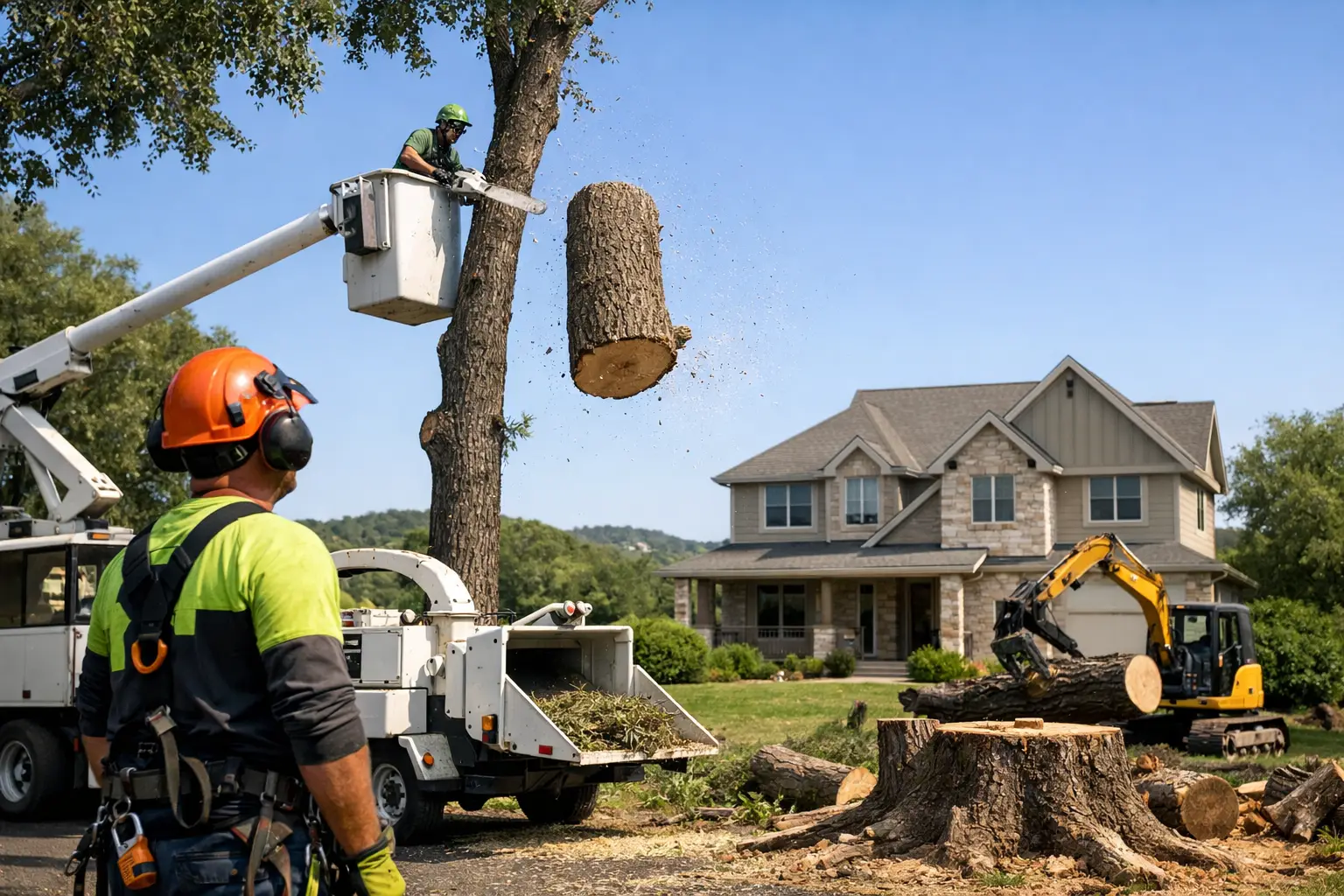
A tree can look fine from the street and still be a serious problem over a roof, fence, driveway, or play area. This residential tree removal guide gives Austin-area homeowners straight answers on when removal makes sense, what affects the job, and how a professional crew protects the rest of your property while taking a tree down.
Removal is not the answer for every overgrown tree. Pruning can often solve roof clearance, dead-limb, and low-canopy issues without losing a healthy tree. But when a tree is structurally unsound, declining, badly positioned, or damaged beyond a safe repair, waiting can turn a manageable project into an emergency.
When Tree Removal Is the Safer Call
A leaning tree is not automatically dangerous. Some species naturally grow at an angle, and a long-standing lean with stable roots may not require removal. What matters is whether the lean is new, worsening, or paired with other warning signs.
Pay close attention to exposed roots, soil lifting around the base, large cracks in the trunk, hollow areas, fungus growing near the root flare, or major limbs that have split from the trunk. A tree that suddenly drops large healthy branches can also signal internal decay or a weak branch connection.
Storm damage changes the equation. A broken limb caught in the canopy may look secure, but it can shift with wind and fall without warning. Trees damaged near a home, pool, fence, vehicle, or utility line deserve quick attention. Do not climb, pull on a hanging limb, or attempt to cut it from a ladder. That is how a bad limb becomes a serious injury or a damaged roof.
There are also practical reasons to remove a tree. Roots may be lifting a driveway or pressing against a retaining wall. A tree may be too close to a structure for reasonable maintenance, or its canopy may create constant roof debris and moisture problems. In a tight lot, removing one poorly placed tree can protect the healthy trees and usable space around it.
Residential Tree Removal Guide: Start With the Site
The tree itself matters, but the work area often determines how complex the removal will be. A tall tree in an open backyard can be handled very differently from a similar tree growing between a house, a fence, and a neighbor's garage.
Before requesting an estimate, take a walk around the property and note what sits beneath and around the tree. Look for rooflines, power lines, gates, irrigation heads, sheds, patios, pools, septic areas, and vehicles. Tell the crew about any known underground utilities, fragile landscaping, or access limits. Clear details up front lead to a more accurate quote and a safer plan.
Access is a major factor. Can equipment reach the backyard through a gate, or will material need to be carried out by hand? Is there enough room to lower branches with rope, or does every piece need controlled rigging over a fence? These details affect labor, time, and cost. They are not upsells. They are part of doing the job without gambling with your property.
If utility lines are involved, keep your distance and contact the appropriate utility provider when needed. A homeowner should never assume a line is safe because it appears insulated or sits above the tree. Professional tree crews work around hazards with a plan, but electrical lines require special care and may require coordination beyond a standard removal.
Why controlled rigging matters in tight yards
A tree does not need to be dropped in one piece. In many residential removals, the safer approach is to dismantle it section by section. Limbs are cut, tied off, and lowered into a designated landing area. The trunk is then removed in manageable sections.
That controlled process takes more time than simply cutting and hoping for a clear fall zone, but it protects roofs, fences, landscaping, and driveways. It is especially valuable in older Austin neighborhoods and smaller lots where a mature tree may have grown close to several structures over decades.
What Affects Tree Removal Cost?
A fair quote should reflect the actual work, not just the tree's height. Tree species, trunk diameter, condition, access, nearby hazards, debris volume, and whether the stump is included all matter. A dead tree can sometimes be more difficult than a healthy one because brittle wood breaks unpredictably. A smaller tree beside a power line may require more planning than a larger tree in an open field.
Ask what the estimate includes. Does the price cover cutting, hauling, cleanup, and removal of all brush and wood? Is stump grinding a separate service? Will the crew rake and blow the work area before leaving? Clear scope prevents surprises after the job is underway.
Lowest price is not always the lowest risk. A cheap quote may leave out hauling, cleanup, insurance coverage, careful lowering, or the labor needed to protect the property. Homeowners should compare the work plan and included services, not just the bottom-line number.
A dependable contractor should provide a free on-site estimate, explain the approach in plain language, and answer questions without pressure. Douglas Tree Service ATX provides no-deposit booking, insured service, and full cleanup because homeowners should not have to chase down basic details when they are dealing with a hazardous tree.
Check Local Rules Before Scheduling Work
Tree rules can vary by city, neighborhood, and property type. In Austin, certain protected trees may require review or a permit before removal, particularly based on trunk size and species. Homeowners associations may also have separate rules about exterior work, access, or replacement planting.
Do not rely on a neighbor's past experience or an old online post. Requirements can change, and the facts of each property are different. Verify applicable city and HOA requirements before work is scheduled, especially for a large oak or other mature tree. Taking a few minutes to confirm the rules can prevent delays, fines, or a difficult conversation after the fact.
Oak wilt is another local concern. When pruning or removing oaks during higher-risk periods, proper timing and cut treatment matter. A crew that understands local tree practices will avoid careless cuts and take reasonable precautions to reduce risk to nearby oaks.
How to Prepare Your Yard for Removal Day
Most preparation is simple, and it helps the crew work faster and more safely. Move vehicles out of the driveway and away from the work zone. Pick up patio furniture, grills, toys, potted plants, and other items that could be damaged by falling debris or equipment traffic.
Make sure gates are unlocked and pets are safely indoors. If access runs through a side yard, point out sprinkler heads, low-voltage lighting, drainage covers, or other features that may be hard to see. Let nearby neighbors know if trucks, noise, or temporary street access could affect them.
You do not need to clear every leaf or cut back your landscaping before the crew arrives. Just provide a safe path and communicate any concerns. A good crew will explain where material will be staged, how branches will be lowered, and what the yard should look like when the work is finished.
Do You Need Stump Grinding?
Leaving a stump is sometimes reasonable. If it sits in a wooded corner, does not interfere with mowing, and is not likely to attract unwanted pests, you may decide to leave it. Keep in mind that stumps can sprout, decay slowly, and remain a tripping or mowing obstacle for years.
Stump grinding is usually the better choice for lawns, garden beds, future planting areas, and spots near a walkway or driveway. The machine grinds the stump below ground level, leaving wood chips that can be removed, spread, or used elsewhere depending on the site. Grinding does not remove every root, but it eliminates the visible stump and makes the area easier to use.
If you plan to plant a new tree in the same place, ask about placement. Planting directly over the old stump grindings can create poor growing conditions. A little spacing and fresh soil usually give the new tree a better start.
Questions Worth Asking Before You Hire
Ask whether the company is insured, how it will protect nearby structures, and whether cleanup and hauling are included. Ask if the crew plans to use controlled rigging when there is no safe drop zone. If a stump is part of the project, confirm whether grinding, chip removal, and surface cleanup are included in the written scope.
You should also ask who will be on site and how communication will work if conditions change. Tree work can reveal hidden decay, unstable sections, or access issues that were not visible during the first walk-through. Straight answers and a clear change-of-plan process are signs of a professional operation.
A tree removal project should leave you with a safer yard, not a new list of repairs and loose debris. Choose a crew that plans the work carefully, respects the property line, and treats cleanup as part of the job. When a tree is giving you reason for concern, acting before the next storm is often the easiest decision you will make.
Texas Tree Authority Hub
Official Texas resources we trust.