How to Clear Branches From Your Roofline
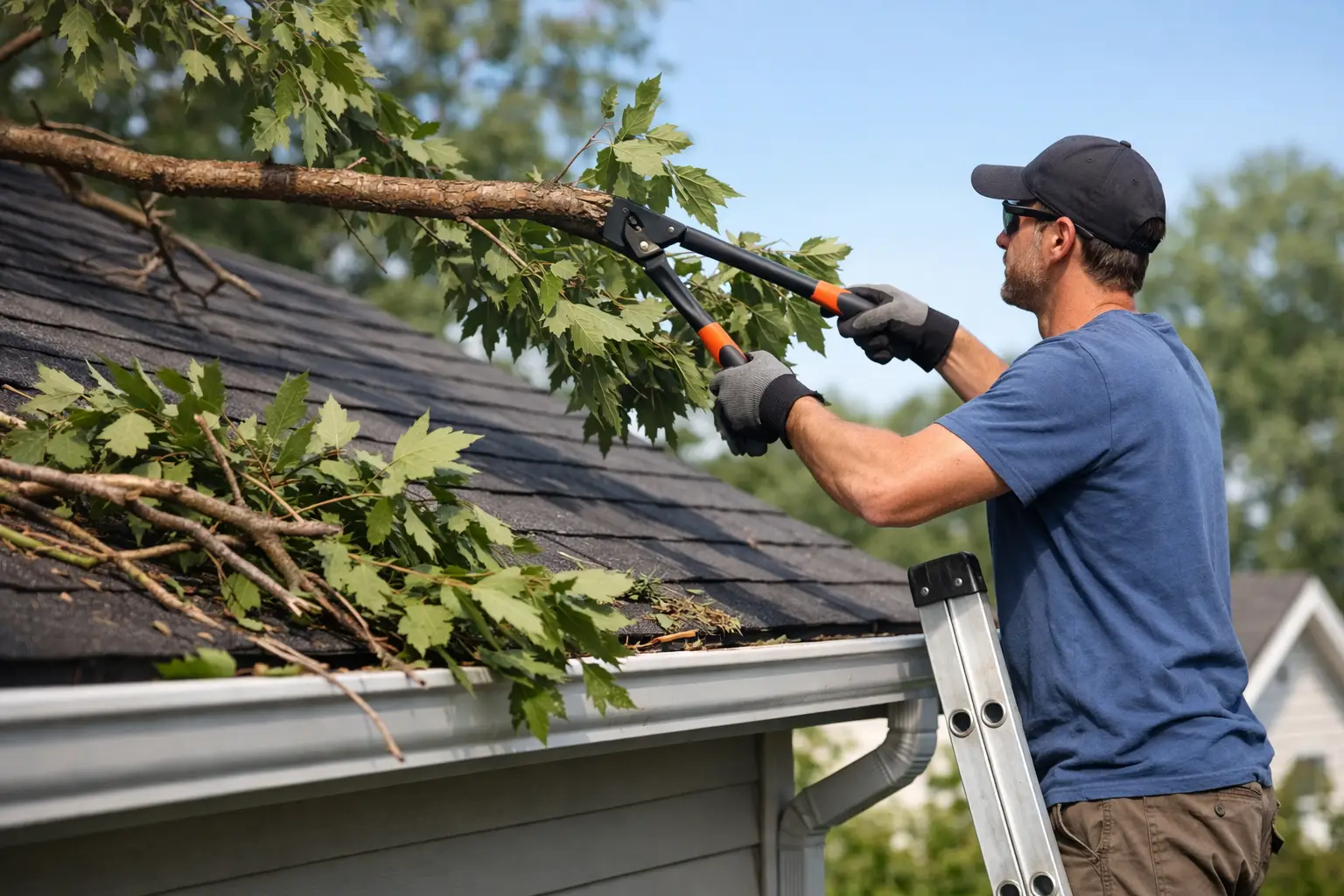
A branch brushing your shingles may look like a minor yard chore, but it can turn into roof damage fast. Learning how to clear branches from roofline areas starts with knowing which limbs are safe to handle from the ground and which ones need a trained, insured tree crew. The goal is not to leave a big gap around your house. It is to create enough clearance that limbs cannot scrape, drop debris, or give pests an easy path onto the roof.
Start by Checking the Whole Roofline
Walk the perimeter of your home during daylight and look up from several angles. Pay attention to branches touching shingles, hanging over gutters, resting on flashing, or swaying close to the roof in a normal breeze. A limb that looks clear on a calm day may hit the house every time Austin gets a strong storm front.
Also look for dead wood, cracked limbs, bark splitting near a branch union, and branches that cross each other. Those are not just clearance issues. They can be signs that a limb may fail under wind, rain, or the extra weight of wet leaves.
A practical target is to keep branches from rubbing against the house and to provide open air around the roof edge. The exact clearance depends on the tree, the roof shape, and how much the limbs move in the wind. Over-pruning a healthy tree just to create a wide empty space is not the answer. Strategic cuts protect both the roof and the tree.
Decide Whether the Job Is Safe for DIY
Some light work is reasonable for a homeowner. Small, reachable shoots can often be removed with clean hand pruners or a pole pruner while both feet stay firmly on the ground. If you can safely reach the branch without climbing, stretching overhead, or standing near a power line, the job may be manageable.
Stop and call a professional if the branch is large, dead, high above the ground, over the roof, or close to electrical service lines. The same goes for limbs that would fall onto a fence, driveway, pool, or neighboring property once cut. A branch does not have to be huge to cause a problem. Even a modest limb can hit a window, punch a gutter, or pull a worker off balance if it swings unexpectedly.
Never use a chainsaw from a ladder. It is one of the most common ways routine trimming becomes an emergency. Roof work adds another layer of risk because loose leaves, steep slopes, and uneven footing make it hard to control yourself and the branch at the same time.
How to Clear Branches From Roofline Areas Safely
For small branches that can be reached from the ground, begin by setting up a clear work zone. Move vehicles, patio furniture, grills, and anything breakable away from where cuttings may land. Keep children and pets inside, and do not work alone if the limb is near your home or a walkway.
Use sharp bypass pruners for small growth and a pole saw only when you can keep the tool controlled. Wear eye protection, gloves, sturdy shoes, and a hard hat if you are working beneath any overhead limbs. Avoid trimming in high winds, after heavy rain, or when the ground is slick.
Make cuts just outside the branch collar, which is the slightly raised area where the branch joins the trunk or larger limb. Do not cut flush against the trunk, and do not leave a long stub. A proper branch-collar cut gives the tree the best chance to seal the wound naturally.
For a branch that is more than a few inches thick, do not assume a single cut will be clean or predictable. The weight of the limb can tear bark down the trunk as it drops. Tree professionals use controlled cutting methods and rigging when necessary to remove sections without letting them swing or fall onto the house.
Do Not Cut Back to a Random Stub
A common mistake is cutting every limb back to the same height or leaving short stubs near the roof. This may look tidy for a few weeks, but it can stress the tree and trigger fast, weak regrowth. Those new shoots often return to the roofline quickly and are more likely to break in storms.
Instead, reduce a branch back to a healthy lateral branch that is large enough to take over its role. This takes more judgment than simply cutting until the limb is out of the way, which is why mature trees near a house deserve careful pruning rather than aggressive hacking.
Protect Gutters, Shingles, and Roof Ventilation
Branches over a roof create more than impact damage. Leaves, twigs, acorns, and seed pods accumulate in gutters and valleys, trapping water where it should drain freely. Constant shade can also keep sections of the roof damp longer after rain, encouraging moss, algae, and premature shingle wear.
Once branches are cleared, remove the debris they have already dropped. Check gutters, downspouts, roof valleys, and the area behind chimneys or roof vents. If you are not comfortable accessing the roof safely, have the gutters cleaned from a secure setup or hire a qualified provider. Clearing a limb but leaving packed debris behind only solves part of the problem.
Pay close attention to branches near attic vents. Good airflow helps manage heat and moisture in the attic. Dense foliage pressed against those areas can restrict ventilation and make it harder to spot roof issues before they become expensive repairs.
Watch for Power Lines and Service Drops
If a tree is near the electrical line running from the utility pole to your home, treat it as a professional-only situation. Do not try to pull a branch away with a rope, use a pole tool near the line, or climb the tree. Electricity can travel through branches, tools, ladders, and wet ground.
A tree service can assess how to remove or reduce the limb while protecting your home and maintaining a safe distance from the line. In some situations, the utility company may need to handle work on or immediately adjacent to its equipment. Straight answers matter here: no roof-clearance job is worth taking a chance around energized lines.
Consider the Tree Species and Time of Year
In Central Texas, pruning timing can matter, especially around oak trees. Oaks should be pruned with oak wilt prevention in mind. Fresh cuts can attract sap-feeding beetles that spread the disease, so proper timing and immediate wound treatment are part of responsible oak pruning.
For other trees, the best timing depends on their health, growth pattern, and whether they are actively flowering or setting fruit. Dead, broken, or hazardous branches should be addressed promptly regardless of season. Healthy live limbs, however, can often be scheduled for a time that reduces stress on the tree.
If the roofline issue comes from a fast-growing tree, plan for routine maintenance rather than waiting until branches are again resting on the house. A lighter, periodic trim is usually easier on the tree and more affordable than a major corrective pruning job after several years of unchecked growth.
When Controlled Rigging Is the Right Call
A limb directly over a roof often cannot be safely dropped in one piece. That is where controlled rigging makes the difference. The crew removes the branch in manageable sections, lowers material away from the roof, and keeps it from striking gutters, windows, landscaping, or fences.
This approach is particularly useful in Austin neighborhoods where homes are close together and mature trees grow over driveways, pools, and tight side yards. It may take longer than simply cutting and dropping, but the added control protects the property below. The lowest quote is not always the best value when the work is happening inches from your roof.
Douglas Tree Service ATX handles roofline clearance with insured crews, proper pruning cuts, controlled rigging when needed, and full cleanup included. Homeowners receive a free on-site estimate and no-deposit booking, so they can understand the scope before work begins.
Do Not Ignore Storm-Damaged Limbs
After a storm, inspect the roofline from the ground before you begin cleanup. Look for limbs caught in the canopy, partially broken branches hanging over the roof, fresh cracks in larger leaders, and branches that have shifted closer to power lines. A limb can remain suspended after a storm and fall later without warning.
Avoid pulling on a hung-up branch or cutting the limb supporting it. The tension may be unpredictable, and the branch may roll, snap, or drop toward the house. Keep the area clear until it can be removed safely.
Roofline clearance is simple when the growth is small and reachable. Once a limb is heavy, elevated, or positioned over your home, the smart move is to protect the roof, protect the tree, and let a qualified crew handle the risk. A clean line around the house gives you one less thing to worry about when the next hard wind moves through.
Texas Tree Authority Hub
Official Texas resources we trust.