Branches Over Power Lines: What Homeowners Should Do
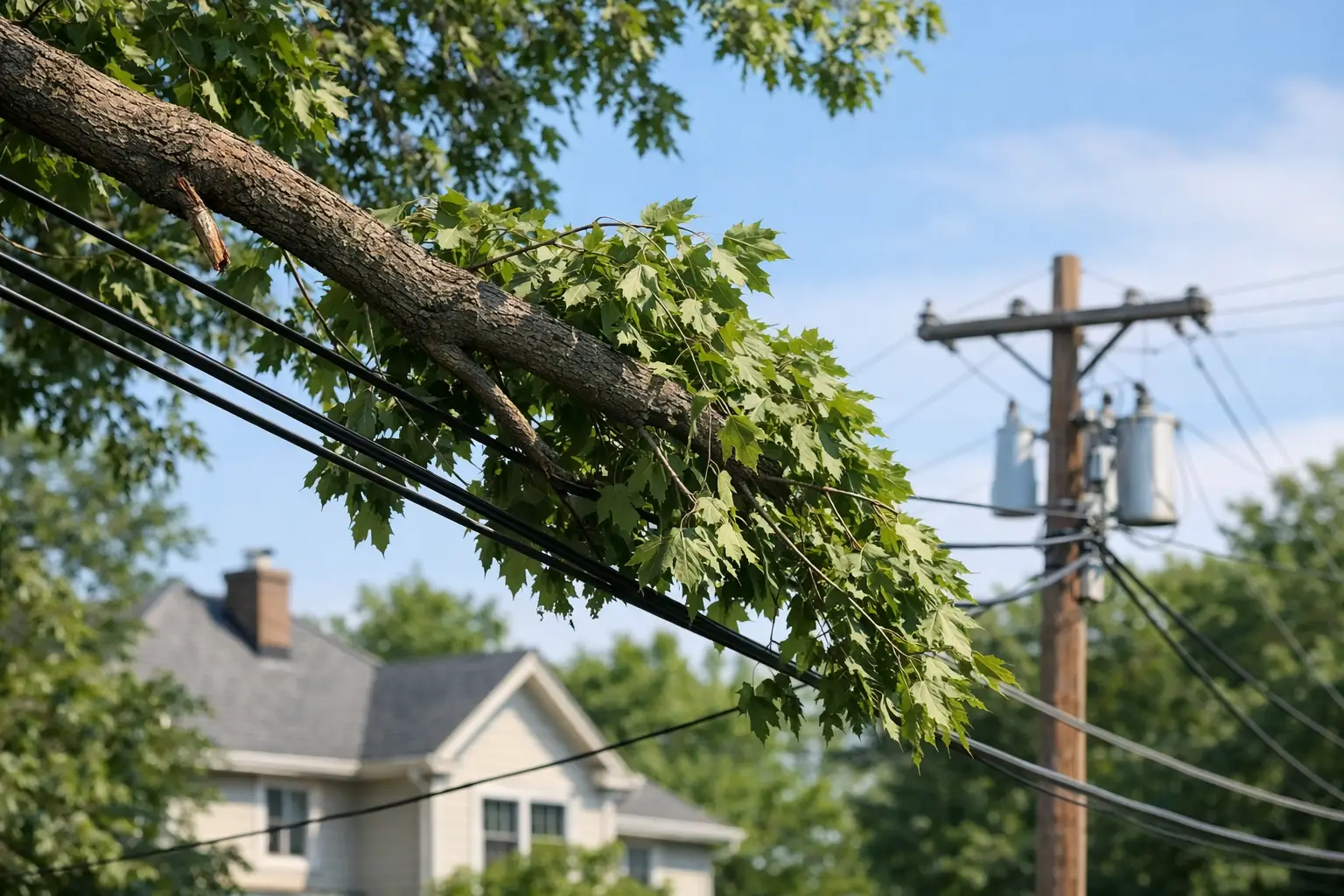
A limb brushing an electrical line is not a yard chore to save for Saturday. Branches over power lines can cause outages, start fires, damage service equipment, and create a serious shock hazard - especially after high winds or heavy rain. The safest move is to keep your distance, identify who owns the line, and bring in the right help before a small clearance issue becomes an emergency.
For Austin homeowners, this comes up often. Live oaks, cedar elms, pecans, and fast-growing hackberries can push into service lines quickly, while storm-damaged limbs can sag without fully breaking. What looks like a routine trim from the ground may involve energized equipment, difficult access, or a limb that needs to be lowered in a controlled way.
First, Know Which Power Line You Are Looking At
Not every wire running to or near a house has the same owner or the same risk level. The larger, higher lines on poles generally belong to the electric utility. These are distribution lines and should never be approached, cut near, or handled by a homeowner or regular tree crew without proper utility coordination.
The lower line that runs from the pole to your home is usually called a service drop. It may appear insulated, but it can still be dangerous. Trees growing around it require careful planning because a cut branch can swing, fall, or pull the wire toward a person, roof, fence, or metal equipment.
Communication and cable lines are often lower and smaller, but do not assume a line is safe based on its appearance. If you cannot positively identify it, treat it as energized and stay clear.
When Branches Over Power Lines Need Immediate Attention
Some tree and line situations should not wait for routine scheduling. Keep people, pets, ladders, vehicles, and tools away if a branch has fallen onto a line, a line is down, sparks are visible, or you hear buzzing or popping. Call emergency services if there is an immediate threat to life, a fire, or a wire on the ground. Then report the issue to the electric utility.
A tree may also be urgent when a large split limb is hanging directly above a line, even if it has not made contact yet. High winds can turn that hanging limb into a falling hazard in seconds. Do not try to pull it down with a rope, pole saw, or truck. A branch that seems light enough to move can shift unexpectedly and make contact with energized equipment.
For less immediate situations, such as a canopy gradually growing toward a service line, it is still wise to address it before storm season. Planned work gives a qualified crew room to assess access, determine safe drop zones, and decide whether utility involvement is needed.
What You Can Safely Do While You Wait
Homeowners should not trim, climb, or use an extension ladder near electrical lines. Even a nonmetal ladder, a wet branch, or a long-handled pruner can create a dangerous path to electricity. Do not park beneath a limb touching a line, and do not let children play near the area.
You can take clear photos from a safe distance for the utility or tree service. Note whether the branch is touching the line, hanging above it, or pressing against your home. If a storm caused the damage, look for changes such as a leaning trunk, exposed roots, cracked branch unions, or newly sagging wires. Those details help determine how quickly the problem needs to be addressed.
If the limb is near your home’s service drop but not touching it, avoid opening gates or moving items directly beneath the work area until the job is scheduled. Giving the crew a clean path to the tree, driveway, and utility access point helps the work go faster and reduces the chance of property damage.
Who Handles Tree Work Near Electrical Lines?
The answer depends on the line and the extent of the encroachment. Utility-owned distribution lines are typically managed by the electric provider. The utility may trim vegetation, de-energize a line, or determine whether a contractor can work nearby under specific conditions.
For trees near a home’s service line, homeowners often need an insured tree company experienced with hazardous limb cutting and controlled rigging. The work may require coordination with the utility before any branch is removed. A professional crew should not guess, rush the cut, or simply climb into the canopy because the branch “looks clear.”
A reputable crew will examine the limb’s weight, the direction of tension, available clearance, the landing zone, and what sits below it. In tight Austin yards, that can mean carefully lowering sections away from roofs, fences, pool equipment, driveways, and the service line instead of dropping them freely.
Why Controlled Rigging Matters Near a House
A branch over a power line is rarely the only concern. It may also be over a roof edge, gate, air-conditioning unit, or a neighbor’s fence. Cutting it in one piece can create more risk than the branch itself.
Controlled rigging lets a trained crew remove manageable sections and guide them into a safe landing zone. The process takes more time than a quick cut, but it protects the property and helps prevent a swinging limb from catching a wire on the way down. It is especially useful for heavy lateral limbs in live oaks and mature pecans, where weight can be misleading from the ground.
The goal is not to strip every branch away from the line. Over-pruning can weaken a tree, encourage aggressive regrowth, and leave it more vulnerable in the next storm. Good pruning focuses on selective reduction and proper cuts at the branch collar, preserving the tree’s structure while creating appropriate clearance.
Avoid Topping Trees to “Solve” the Problem
Topping - cutting back major branches to stubs - is a common shortcut that often creates a bigger problem later. The tree responds with fast, weak shoots that can grow right back toward power lines. Those new attachments are more prone to failure than healthy, well-structured branches.
It also leaves larger wounds, reduces the tree’s natural defenses, and can make an otherwise valuable shade tree look rough for years. The right amount of clearance depends on the species, growth rate, line type, and how the branch is positioned. A slow-growing mature oak needs a different approach than a young, fast-growing elm.
In Central Texas, oak pruning also calls for seasonal awareness and clean work practices. Timing and wound management matter when trying to reduce the risk of oak wilt transmission. A professional crew should account for tree health as well as line clearance.
Plan Ahead Instead of Waiting for the Next Storm
The best time to deal with branches near power lines is before they are touching. Walk your property a few times a year, particularly after spring growth, summer storms, and strong cold fronts. Look upward from the driveway, backyard, and street side, since a branch may be clear from one angle but growing directly toward a line from another.
Pay close attention to trees that have been previously cut back. They can produce dense new growth that reaches wires faster than expected. Also watch for deadwood, cracked unions, and limbs that are rubbing against one another near the service drop. These are easier and safer to correct before wind loads or ice make them unstable.
When you request an estimate, ask how the crew will protect the line, control heavy sections, protect nearby structures, and handle cleanup. Straight answers matter. You should know whether utility coordination is needed before anyone starts cutting, and you should not be asked for a deposit just to get a clear plan.
Douglas Tree Service ATX handles residential tree trimming and hazardous limb removal with insured crews, careful rigging when space is tight, and full cleanup after the work is complete. The job should leave your yard safer and cleaner, not give you a new repair bill to worry about.
A branch near a power line may not look dramatic from the sidewalk, but it deserves respect. Give it space, make the right calls, and address it while there is time to do the work carefully instead of under storm pressure.
Texas Tree Authority Hub
Official Texas resources we trust.