What Is Tree Topping and Why It’s Bad
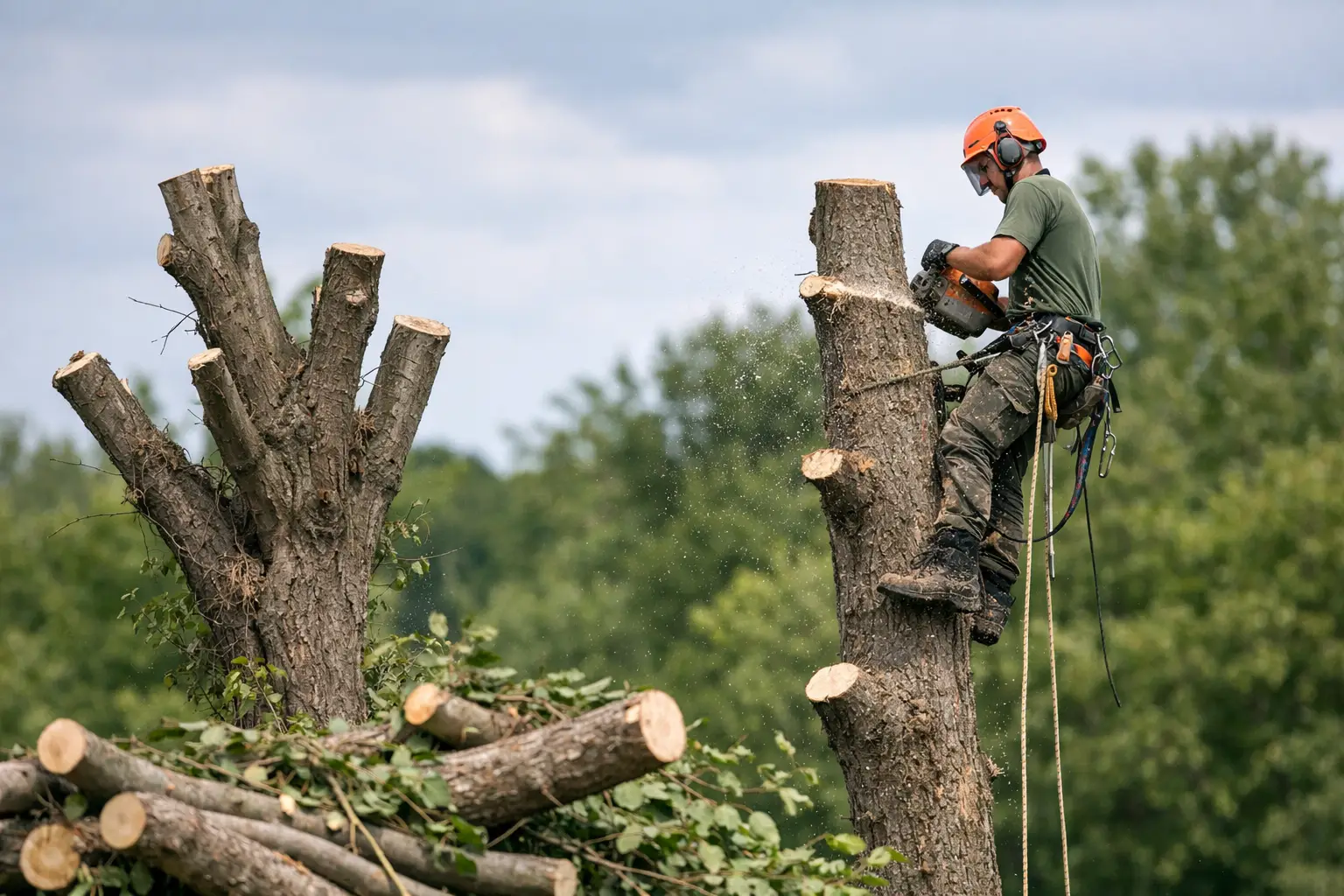
If a tree crew says they can make your tree shorter by cutting the top off, that is usually a red flag. What is tree topping? It’s the practice of cutting back large upper branches or the main trunk to stubs, often to quickly reduce height. It may look like a fast fix for an overgrown tree, but in most cases it creates bigger problems than the one you started with.
For homeowners, topping often sounds practical. The tree feels too tall, limbs are getting close to the roof, or the yard gets too much shade. A low-price crew may offer to “take it down a bit” without explaining what those cuts do to the tree. The trouble is that topping is not the same as proper trimming. It is a harsh shortcut, and trees usually respond badly.
What is tree topping in plain terms?
Tree topping means removing the upper portion of a tree’s canopy by making large cuts at random points instead of cutting back to healthy lateral branches. In plain English, it means chopping off the top and leaving oversized stubs behind.
A properly pruned tree keeps its natural structure. Cuts are made with the tree’s growth pattern in mind, usually at the branch collar or back to a branch that can take over. A topped tree loses that structure all at once. Instead of controlled reduction, you get blunt cuts that the tree has a hard time closing over.
Some crews call topping by softer names like hat-racking, heading back, rounding over, or lowering the canopy. The wording may change, but if the plan is to remove the top of the tree without respecting branch structure, it is topping.
Why tree topping is considered bad practice
The biggest issue is stress. Trees make food through their leaves. When a large share of the canopy is removed suddenly, the tree loses a major part of its energy system. That puts it into survival mode.
After topping, many trees respond by pushing out fast new shoots near the cuts. At first, homeowners sometimes think this means the tree recovered well. It usually means the opposite. Those shoots are emergency growth. They grow quickly, but they are weakly attached and more likely to break later.
Large topping cuts also create decay problems. A tree can handle small, proper pruning cuts much better than oversized wounds on major limbs or the main stem. When cuts are too large and made in the wrong place, the tree may struggle to seal them. That opens the door for rot, insects, and long-term structural weakness.
There is also the appearance issue. A topped tree rarely grows back into a balanced, natural form. It often becomes dense at the ends, bare in the middle, and awkward overall. So the quick cosmetic fix usually makes the tree look worse within a season or two.
What happens after a tree is topped?
The short-term result is a tree that looks smaller. That is the part people notice first. The longer-term result is where the trouble starts.
New shoots often sprout in clusters around the cut points. Because they come from outer layers of tissue instead of from strong, established branch unions, they are not anchored the same way normal limbs are. As they get longer and heavier, they can split off more easily, especially during wind or storms.
This is one of the biggest trade-offs homeowners miss. Topping may reduce height today, but it can create more hazardous regrowth later. So instead of solving a safety concern, it can turn the tree into an ongoing maintenance problem.
The tree may also become more vulnerable to sunscald. Leaves and branches that were once shaded are suddenly exposed to intense sunlight. In hot climates, that stress can be significant, especially during long dry stretches.
In Austin, heat and storm weather already put trees under pressure. A topped tree is often less prepared to handle both.
Why homeowners ask for topping in the first place
Most people are not trying to harm their trees. They are usually trying to solve a real property concern. Maybe the canopy is brushing the roof. Maybe a tree feels too large for the front yard. Maybe the branches are hanging over a driveway, pool, or fence.
Those are valid concerns. The mistake is assuming topping is the right tool for them.
Sometimes the better answer is selective pruning to improve roof clearance, remove hazardous limbs, and reduce end weight on heavy branches. Sometimes the tree was planted in the wrong place years ago and has outgrown the space. In that case, repeated topping is not a good management plan. Removal and replacement may make more sense than forcing a large tree to stay unnaturally small.
That is where straight answers matter. A trustworthy crew should explain the options, the limits, and the likely outcome of each one instead of promising a cheap shortcut.
Topping vs proper pruning
This distinction matters because many homeowners hear “trim” and assume all cutting is basically the same. It is not.
Proper pruning is targeted. It removes dead wood, damaged limbs, crossing branches, or specific sections that need clearance from structures. It can also reduce weight on selected limbs by cutting back to lateral branches that are large enough to take over growth. The goal is to improve safety, health, and structure without wrecking the tree’s natural form.
Topping is blunt. It removes too much canopy too fast, ignores natural branch structure, and leaves the tree trying to recover from oversized wounds.
There are cases where a tree’s size truly needs to be managed, but that should be done with reduction cuts, not random heading cuts. Even then, it depends on the species, the tree’s age, its condition, and how much can be removed without causing harm.
Is tree topping ever acceptable?
In normal residential tree care, it is usually the wrong move. There are a few situations where severe cutting may happen, such as storm damage response or utility clearance, but those are not the same as routine topping for appearance or convenience.
If a tree has already failed, split, or lost its main top in a storm, the remaining cuts may be about hazard reduction rather than ideal pruning. Even then, the goal is to stabilize the situation, not to reshape the tree by hacking it back.
For healthy shade trees in a yard, topping is rarely a good recommendation. If a tree is too tall for the space, the honest answer may be that it is the wrong tree in the wrong location.
How to tell if a crew is proposing topping
Watch for simple phrases. If someone says they will cut the tree back to stubs, flatten the top, or take off all the high growth without talking about branch structure, that is a warning sign.
You should also be cautious if the quote is unusually cheap and the plan sounds vague. Low-cost crews often sell topping because it is fast. It takes less care, less skill, and less cleanup planning than proper structural pruning. But the lower upfront price can lead to repeated trimming, storm breakage, and eventual removal.
A professional crew should be able to explain what they are cutting, why they are cutting it, and how the tree is likely to respond. Clear answers matter, especially when the tree is close to a home, fence, or power line.
What to do instead of topping
The right solution depends on the actual problem. If you need roof clearance, selective pruning may be enough. If you are worried about a long, heavy limb over a driveway or patio, reducing end weight on that specific branch may lower the risk without gutting the canopy.
If the tree is dead, badly decayed, or simply too large for a tight residential space, removal can be the safer and more honest option. That is not the answer homeowners always want, but it is better than topping a tree into decline and dealing with the consequences later.
For homeowners who want shade, curb appeal, and safety, the goal should be controlled pruning that respects the tree’s structure. That usually gives you a better-looking tree, a safer property, and fewer surprise problems after the next storm.
At Douglas Tree Service ATX, no topping is part of doing the job the right way. Homeowners deserve straight answers, safe work, and cuts that protect the tree and the property.
If a tree on your property feels too big, too close, or too risky, do not let anyone sell you a shortcut just because it sounds simple. The better question is not how much of the top can come off. It is what will actually make the tree and your yard safer over time.
Texas Tree Authority Hub
Official Texas resources we trust.