Tree Removal Near Power Lines Done Safely
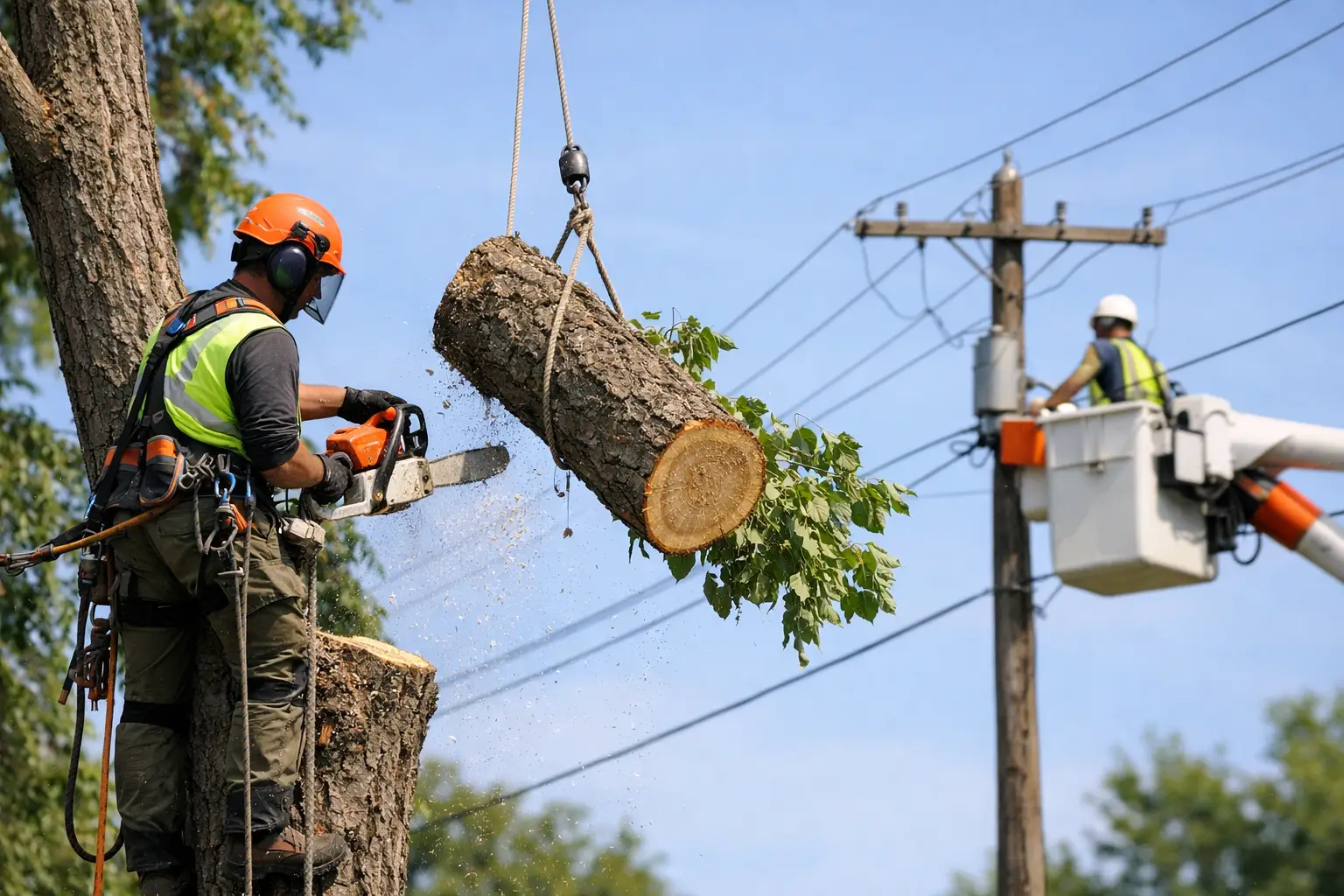
When a limb is hanging over a service line or a whole tree starts leaning toward the street, most homeowners feel the same thing right away - this is not a weekend project. Tree removal near power lines is one of those jobs where a small mistake can turn into a damaged roof, a neighborhood outage, or a serious injury fast.
In Austin, this comes up more than people expect. Fast-growing trees, storm damage, drought stress, and tight residential lots all make utility conflicts more common. If the tree is close to overhead lines, the safest move is to slow down, get a real assessment, and make sure the work is handled with the right equipment, the right plan, and the right crew.
Why tree removal near power lines is different
A basic backyard removal is one thing. A removal near energized lines is another. The risk is not just the tree touching the wire. Limbs can swing, tops can shift during cutting, and even a controlled piece can move unpredictably if there is tension in the canopy.
That is why experienced crews treat these jobs differently from the first walk-through. The removal plan has to account for drop zones, line clearance, rigging points, equipment access, and what needs to happen if the tree cannot be safely felled in one piece. In many cases, the tree has to be dismantled section by section with controlled rigging so each cut piece is lowered away from the line instead of falling freely.
For homeowners, the big takeaway is simple: proximity changes everything. A crew that does fine on open removals may not be the right fit when wires are involved.
Who should handle a tree near utility lines?
It depends on which lines are involved.
If branches are tangled in primary utility lines or the tree is directly threatening the main overhead distribution line, the utility company may need to be involved first. Those lines are not something a homeowner should try to manage on their own, and they are not a place for guesswork from a cheap tree crew.
If the issue is around a lower service drop that runs from the pole to your home, the next step still needs caution. Some tree companies are equipped to work around certain situations, but the safest path is always to start with an on-site evaluation. A qualified, insured tree service should be able to tell you whether the job can be handled safely, whether the utility provider needs to disconnect or protect the line first, and what the removal process should look like.
That kind of straight answer matters. You do not want someone showing up eager to cut first and think later.
Signs a tree near power lines should not wait
Some trees can be monitored for a while. Others need attention quickly. If the trunk is leaning more than it used to, if a cracked limb is suspended over the line, or if a recent storm split the canopy, that is not a wait-and-see situation.
The same goes for dead trees close to lines. Dead wood is brittle, less predictable, and more likely to fail during wind or heat. In Central Texas, drought stress can make this worse. A tree may still have part of a canopy, but if major scaffolds are dying back, the structure may already be compromised.
Another red flag is repeated contact. If branches are already brushing the line during normal wind, the problem is not minor. Friction, breakage, and future failure become much more likely over time.
What a safe removal process looks like
A proper job starts before any saw is started. The crew should inspect the tree, identify line types, evaluate the lean, check the condition of the wood, and map out where every section can be lowered. That plan should also include protection for fences, driveways, roofs, and nearby landscaping.
On residential properties, tight spaces are the rule, not the exception. That is where controlled rigging matters. Instead of dropping heavy sections and hoping for the best, the crew uses ropes, friction devices, and careful cutting angles to guide each piece down into a safe landing zone.
Sometimes a climber can perform the work safely. Other times, access and line position may call for a lift or coordination with the utility provider. There is no one-size-fits-all answer, which is exactly why these jobs should be handled case by case.
Cleanup should also be part of the plan, not an afterthought. When a hazardous tree comes down, homeowners should not be left with brush piles, sawdust, and half-finished debris removal.
Tree trimming vs. removal near power lines
Not every tree close to a line needs to come out. In some cases, targeted trimming is enough to restore safe clearance and reduce risk. That depends on the species, the tree’s health, the direction of growth, and whether pruning can solve the issue without ruining the structure.
For example, a healthy tree with one overextended limb may be a trimming job. A declining tree with multiple leaders over the line, included bark, and storm damage is often a removal candidate. There is also a long-term consideration. If the tree will keep growing aggressively back into the line, repeated trimming may cost more over time than removing and replacing it with a better-suited species.
A good company will not push removal when pruning makes sense. They also should not promise that a risky tree can be “trimmed back one more time” if the structure says otherwise.
What homeowners in Austin should ask before hiring
The right questions are practical. Are you insured? Have you handled removals near lines before? How will you protect the house, fence, and driveway? Do you need the utility company involved? Is cleanup included? Do you require a deposit?
These are not picky questions. They are how you separate a professional operation from someone whose whole pitch is a low number and a chainsaw.
You should also pay attention to how the estimate is given. A trustworthy company will explain the risk, the method, and any limits clearly. If they are vague about the line hazard, avoid talking about insurance, or act casual about sections swinging over your roof, move on.
Homeowners around Austin, Round Rock, Pflugerville, and West Lake Hills usually are dealing with tight lots and expensive structures. Saving a little upfront is not worth the cost of damaged property or an unsafe cut.
What affects the cost of tree removal near power lines?
Price depends on more than tree height. Access matters. So does the exact position of the tree in relation to the lines, the condition of the tree, and whether the removal has to be done in small rigged pieces. A clean backyard with open access is different from a back-corner removal over a fence line with limited equipment room.
Emergency timing can also affect cost. If a tree has partially failed after a storm and is actively hung up near power, the job may require a faster response, more caution, and closer coordination.
That said, homeowners should be wary of both extremes. An unusually high quote is not always proof of quality, and a bargain-basement quote can mean corners are about to be cut. Fair pricing usually comes with a clear scope of work, proof of insurance, and no confusion about cleanup.
When fast response matters most
After storms, line-adjacent tree problems tend to pile up all at once. A split oak over a service line or a broken cedar elm hanging toward the street can go from manageable to urgent if another round of wind comes through.
That is where responsive communication matters almost as much as technical skill. Homeowners need to know who is coming, what the next step is, and whether the utility company needs to act first. Waiting around for callbacks while a damaged tree sits over live wires adds stress no one needs.
For that reason, many homeowners prefer an owner-managed local crew that gives straight answers, shows up for the estimate, and does not require a deposit just to get on the schedule. Douglas Tree Service ATX has built its reputation around that kind of service - safe work, fair quotes, and full cleanup without games.
The biggest mistake homeowners make
The biggest mistake is assuming that because a tree looks small, the job is simple. A medium-sized tree in the wrong spot can be far more dangerous than a large tree in an open yard. Power lines change the margin for error.
The second mistake is waiting too long. Trees rarely grow away from utility lines on their own, and structural problems do not improve with another storm season. If something looks off, getting it checked early usually gives you more options and less stress.
If a tree near a line has you second-guessing what is safe, trust that instinct. A quick on-site assessment now is a lot easier than dealing with outages, damage, or an emergency call later.
Texas Tree Authority Hub
Official Texas resources we trust.