Tree Removal in Tight Spaces Done Right
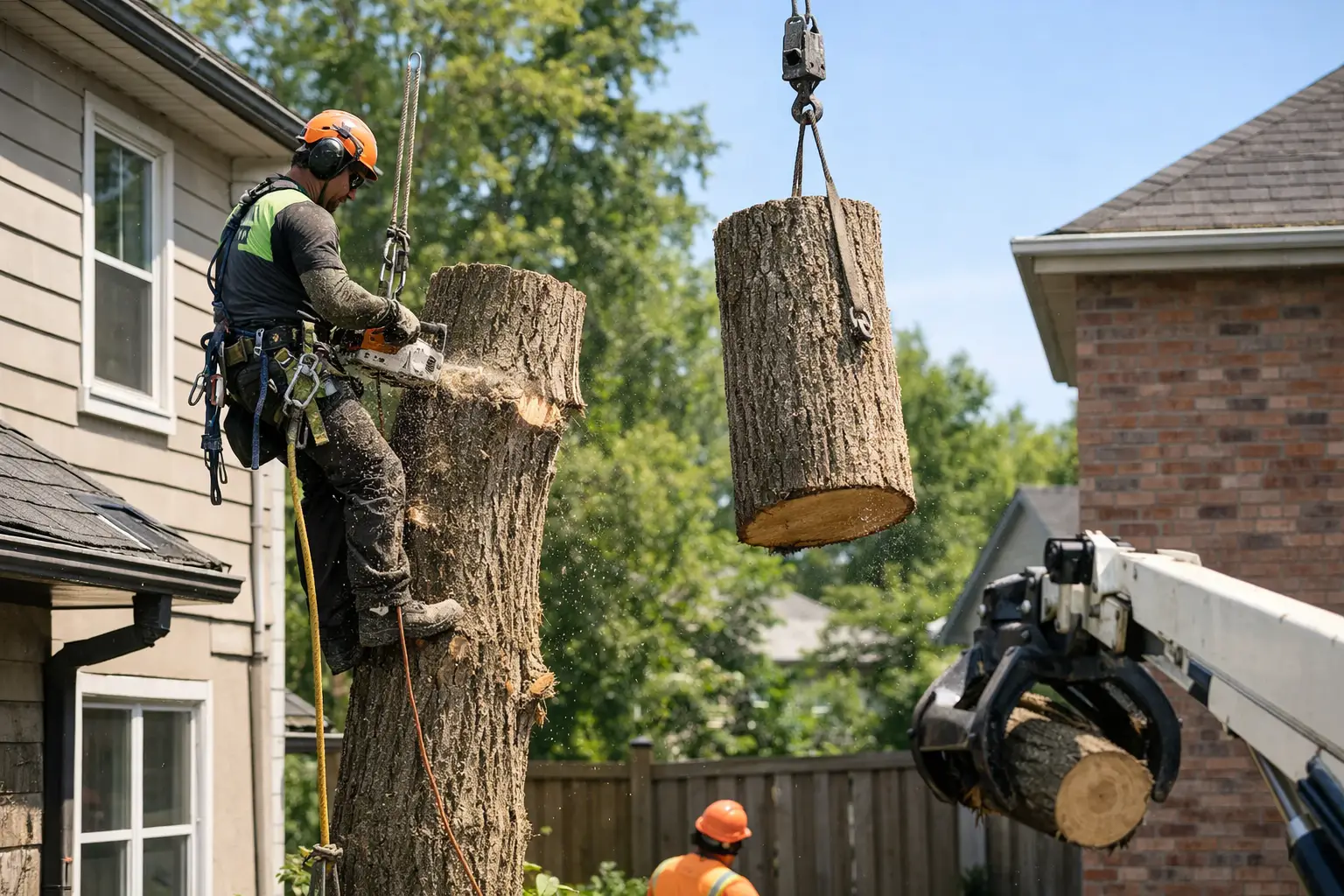
When a tree is boxed in by a roof, fence, driveway, or power line, there is no room for guesswork. Tree removal in tight spaces is one of those jobs where a cheap bid can get expensive fast, because one bad cut can mean broken shingles, crushed fencing, or a limb through a window. Homeowners usually call when the tree already feels risky. The right crew shows up with a plan, not just a chainsaw.
Why tight-space tree removal is a different kind of job
Taking down an open-grown tree in the middle of a yard is one thing. Removing a tree wedged between a house and a shared fence is another. In tight spaces, every piece has to be controlled from the moment it is cut until it reaches the ground.
That changes the whole process. Instead of dropping large sections, a skilled crew may dismantle the tree in smaller pieces, lower limbs with ropes, and stage brush so nothing rolls into landscaping or against the house. The work is slower on purpose. That is usually a good sign, not a bad one.
This is also where experience matters more than raw speed. A fast crew without control can damage a property in minutes. A careful crew protects what is around the tree first, then starts cutting.
What makes a tree removal site "tight"
A lot of homeowners picture a backyard squeezed between two fences, but tight spaces come in several forms. Sometimes the issue is overhead utility lines. Sometimes it is limited access through a side gate. Other times the problem is the target zone itself - a tree leaning over a pool, growing next to a detached garage, or spreading above a driveway that cannot take falling wood.
In older neighborhoods, there may be mature trees planted long before home additions, patios, sheds, and outdoor kitchens changed the space around them. What was once an easy tree to maintain can become a technical removal years later.
The root zone can complicate things too. If the base is close to a slab, retaining wall, or underground utilities, the crew has to think beyond the canopy. The tree may come down cleanly, but the stump and root flare still need to be handled without creating a second problem.
How safe tree removal in tight spaces is planned
Good removal work starts before the first cut. The crew should look at the lean, weight distribution, branch spread, structural defects, and the likely swing path of every section being lowered. They should also look at what needs protection - roofs, gutters, HVAC equipment, fences, gates, pavers, flower beds, and neighboring property.
This is where homeowners can tell the difference between a professional operation and a low-price gamble. A real plan accounts for anchor points, rigging angles, drop zones, and cleanup flow. It also accounts for access. If a backyard has a narrow gate, the crew may need to haul debris out by hand instead of relying on larger equipment.
That affects labor and time, which affects price. It does not always mean the job is huge, but it does mean the quote should reflect the actual complexity of the site.
Rigging is what protects the property
In many tight removals, rigging is the difference between controlled work and property damage. Ropes, lowering devices, and strategic tie-in points allow the crew to guide limbs and trunk sections down instead of letting them free-fall.
This matters most when there is no safe landing area below. A branch over a roof cannot simply be cut and hoped for. It may need to be tied off, cut in a way that balances the weight, and lowered in a controlled arc so it clears the structure without scraping shingles or gutters.
The same goes for fence lines and decorative hardscaping. A well-rigged piece lands where the crew wants it, not where gravity takes it.
Smaller cuts are often the safer choice
Homeowners sometimes expect the tree to come down in big dramatic pieces. In a tight backyard, that is usually not the smart move. Smaller cuts take longer, but they reduce shock load on ropes, minimize bounce on landing, and give the crew more control around delicate structures.
That can make a technical removal look less exciting from the ground, but it is usually a sign the crew is taking the job seriously.
When cranes or lifts make sense
Not every tight-space removal needs specialized equipment, but some do. If the tree is too large, too compromised, or too close to structures for standard climbing and rigging, a crane or lift may be the safest option.
That said, access decides a lot. Some residential lots simply do not allow a crane setup without blocking streets, crossing landscaping, or dealing with overhead lines. In those cases, a climbing crew may still be the better fit, provided they have the right experience for confined removals.
There is no one-size-fits-all method here. The safest approach depends on the tree, the site, and what is around it.
What homeowners should ask before hiring a crew
If you are comparing estimates, ask how the crew plans to protect the house, fence, and driveway. Ask whether the removal will be rigged down in sections. Ask who is responsible for cleanup and whether hauling is included. Ask whether the company is insured.
Those are not picky questions. They are basic protection for your property.
It is also fair to ask what the crew will not do. For example, if a tree is near energized lines, that may limit what can be handled safely without utility coordination. Straight answers matter more than overpromising.
A dependable company will usually be clear about timing, access needs, and site conditions that could change the scope. That kind of communication saves headaches on both sides.
Why the cheapest quote can cost more
Tight-space work is where underbidding shows up fast. If a quote ignores rigging time, protection setup, hand-carry access, or full debris removal, the price may look great at first and fall apart on the job.
Sometimes that turns into pressure for add-on charges once the crew arrives. Other times it turns into rushed cutting, poor cleanup, or damage that costs far more than the original savings. For homeowners, the real question is not just what the job costs. It is what the mistake would cost if the crew gets it wrong.
A fair quote should reflect labor, technical difficulty, and cleanup. It should not require a leap of faith.
Cleanup is part of the job, not an extra favor
After a tree comes down, the yard can look like a storm hit it unless the crew is organized. Good cleanup means brush is removed, wood is hauled or stacked as agreed, and the work area is raked and cleared. If sawdust, twigs, and stump grindings are left everywhere, the job is not really finished.
This matters even more in tight spaces because debris often passes close to walls, gates, and planting beds on the way out. A careful crew protects the property during removal and leaves it usable when they are done.
That includes watching for little things homeowners notice right away, like scrape marks on fences, tire ruts near the driveway edge, or broken irrigation heads. Respect for the property is part of professional tree work.
Tight-space removals often happen under pressure
Many calls come after a storm, a sudden lean, or a large cracked limb over the roof. In those moments, homeowners want speed, but they also need judgment. Fast response matters, especially when a tree is actively threatening a home or blocking access, but rushing the cutting itself is not the answer.
The best crews move quickly in communication and setup, then stay methodical in the work. That balance matters a lot. In Austin neighborhoods with mature trees and smaller lot lines, Douglas Tree Service ATX focuses on exactly this kind of controlled removal work because homeowners need more than a crew that just shows up cheap.
If you are dealing with a tree that has outgrown the space around it, trust your instincts. When a tree is hanging over the house, crowding the fence, or leaning where it should not, the safest next step is usually the one that protects your property before the first branch is ever cut.
Texas Tree Authority Hub
Official Texas resources we trust.