Tree Limbs Hanging Over Roof? What to Do
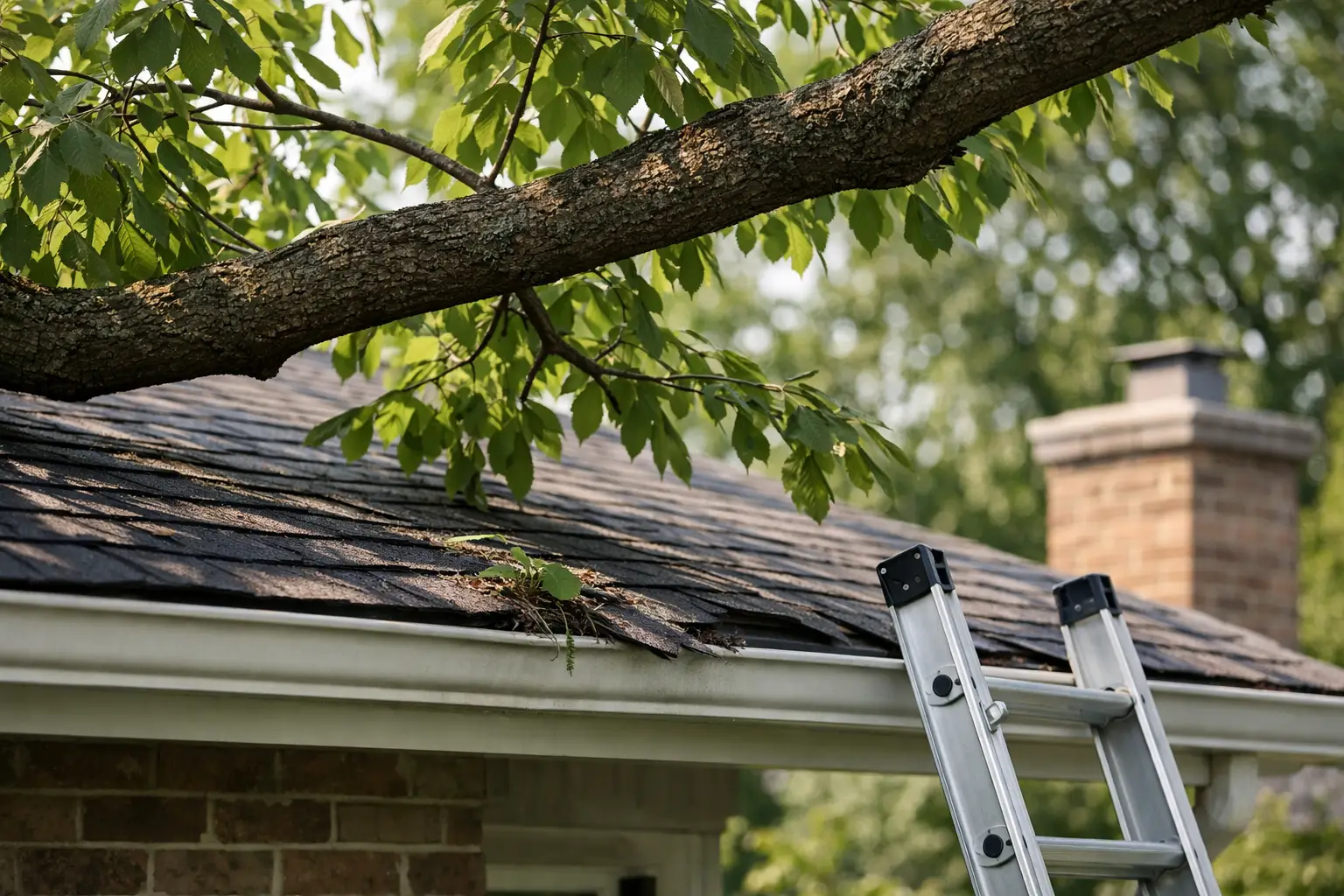
That scraping sound over your bedroom at 2 a.m. usually tells you the same thing - tree limbs hanging over roof lines are not a problem to put off until next season. In Austin, a limb that seems harmless in calm weather can start rubbing shingles, drop leaves into valleys and gutters, or break fast during a storm. Once branches are close enough to touch the roof, the risk shifts from cosmetic to expensive.
Why tree limbs hanging over roof lines are a real problem
Most homeowners first notice the obvious issue, which is contact. A branch that rubs on shingles can wear away the surface over time, especially when wind turns a light touch into repeated scraping. That kind of damage often starts small and stays hidden until you spot granules in the gutter, cracked shingles, or a leak after heavy rain.
The second problem is moisture. Branches hanging low over a roof create shade and slow down drying after rain or morning humidity. That can encourage algae, mildew, and faster roof aging. In a place like Austin, where heat and sudden storms both put stress on exterior materials, extra moisture retention is the last thing you want sitting over your home.
Then there is debris. Leaves, twigs, seed pods, and bark collect in roof valleys and gutters when the canopy is too close. Water stops flowing the way it should, and that backup can lead to rot around fascia boards, soffits, and edges. Homeowners sometimes think they have a gutter issue when the bigger cause is the canopy above it.
Pests are another factor people underestimate. Limbs close to the roof make an easy bridge for squirrels, rats, and other animals looking for shelter. If branches are hanging over roof sections near vents or eaves, that access gets even easier.
How much clearance should you have?
There is no one perfect number for every tree or every roofline, but there is a practical standard. In many residential situations, branches should be trimmed back far enough that they do not touch the roof and do not swing into it during wind. A few feet of clearance is often a good target, but the right distance depends on the tree species, the limb size, the branch weight, and how much movement the canopy has in storms.
That "it depends" matters. A small ornamental tree over a one-story section of roof is different from a heavy live oak limb extending over a driveway and main structure. Fast-growing species may need more aggressive clearance planning because what looks fine today may be back over the roof much sooner than you expect.
This is also where poor trimming causes its own problems. Cutting too much at once can stress a tree, throw off its balance, or trigger weak regrowth. Topping is not the fix. Proper pruning means making the right cuts in the right places so you get roof clearance without setting up bigger hazards later.
Signs the limb needs attention now
If a branch is already resting on the roof, that is not a wait-and-see issue. The same goes for limbs that bounce against shingles during normal wind, hang over bedrooms or main living areas, or show cracking where they attach to the trunk.
You should also move quickly if the branch is dead, split, storm-damaged, or extending over the roof near power lines. In those cases, the job is less about appearance and more about controlled hazard reduction. Bigger limbs above a home are not something to test with a ladder and a pole saw.
Sometimes the warning signs are subtler. You may notice a dark streak on the roof under a branch, gutters that keep clogging in the same spot, or animal activity in the attic shortly after tree growth gets close to the house. Those clues usually point back to canopy clearance.
Can you trim it yourself?
For very small branches you can reach safely from the ground with the right tool, maybe. For anything larger, higher, or positioned over the structure, most homeowners are better off not taking that risk.
The problem is not just the cut. It is how the limb moves after the cut. Branches can swing, roll, drop through shingles, hit gutters, or tear other limbs on the way down. If there is a fence, driveway, pool equipment, or power service below, the margin for error gets even tighter.
A lot of roof-adjacent tree work in Austin requires controlled rigging, especially in compact yards where there is no clean drop zone. That is the difference between a branch being lowered in sections and a branch falling wherever gravity takes it. On paper, trimming looks simple. In a real backyard with a house under the canopy, it rarely is.
The right way to handle limbs over a house
A good trim starts with the tree, not just the roofline. The goal is to reduce risk while keeping the tree structurally sound and natural-looking. That means evaluating which limbs should be removed completely, which should be reduced, and which should stay because they are important to the tree's health and balance.
Proper cuts matter. Branches should be cut at the right location, including respecting the branch collar, so the tree can seal the wound better and reduce the chance of decay. Random flush cuts and stub cuts may look faster in the moment, but they create long-term issues.
Timing matters too. Around Austin, oak trees need special care because of oak wilt concerns. If the limb over your roof is oak, pruning should be handled with that risk in mind. Homeowners often focus on the roof problem and miss the fact that poor timing or poor technique can create a separate tree health problem.
What about storm season?
Storms are when neglected limbs turn into emergency calls. A branch that has been hanging over roof sections for months can hold together just fine in calm weather, then split with one round of wind and saturated wood. When that happens, roof damage, broken gutters, punctures, and blocked driveways are all on the table.
Pre-storm trimming is almost always cheaper and less stressful than emergency response after impact. That does not mean every overhanging branch needs drastic cutting. It means weak, extended, rubbing, or badly positioned limbs should be addressed before they become urgent.
If a storm has already cracked a limb over your home, keep your distance. Do not stand under it, do not try to finish the break yourself, and do not assume the branch is stable just because it has not fallen yet. Partially failed limbs can shift without warning.
What homeowners should expect from a professional quote
A solid estimate for tree limbs hanging over roof areas should be straightforward. You should hear what needs to be trimmed, why those cuts are being recommended, how the crew plans to protect the roof and surrounding property, and whether full cleanup is included.
This is also the time to ask practical questions. Is the company insured? Will the limb be lowered in pieces if needed? Are they avoiding topping? If the tree is close to power lines, are they equipped to work safely around that setup? Clear answers matter more than a rushed low number.
Price can vary based on limb size, access, species, and complexity. A simple trim over a one-story roof is different from a heavy canopy over tight backyard structures. Cheap bids often leave out the very thing homeowners care about most, which is careful execution around the house.
For local homeowners, that is why companies like Douglas Tree Service ATX focus on controlled work, no-deposit booking, and full cleanup included. When a limb is hanging over your roof, peace of mind comes from process, not promises.
Tree limbs hanging over roof areas are usually a warning sign
The branch you can see is not always the only issue. Overextended limbs often point to deferred pruning, storm stress, or canopy growth that has not been managed in years. Taking care of the roof clearance now can help prevent the next problem, whether that is a broken fence, clogged gutters, or a limb failure over the driveway.
If you are hearing scraping, seeing contact, or noticing branches crowding the roofline, trust what your house is telling you. A clean, properly planned trim is a lot easier than dealing with leaks, pests, or storm damage after the fact. The best time to fix an overhanging limb is when it is still a trim job and not an emergency.
Texas Tree Authority Hub
Official Texas resources we trust.