Top Signs a Tree Needs Removal Near Your Home
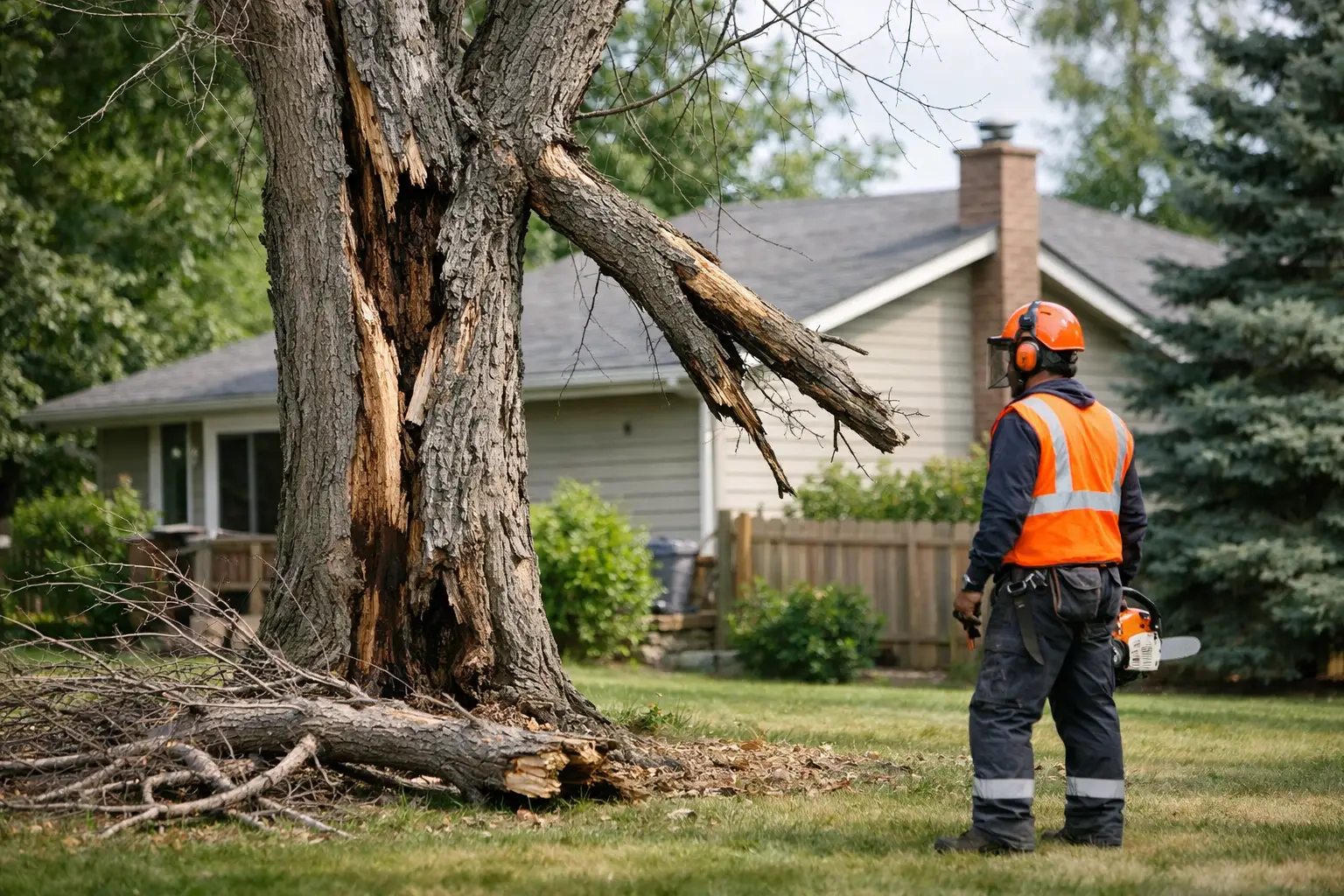
A tree can look green and healthy from the street while hiding a serious problem at the trunk or roots. Knowing the top signs a tree needs removal helps you act before a falling limb, split trunk, or uprooted tree damages a roof, fence, driveway, or vehicle.
Removal is not the answer for every tree issue. Many problems can be handled with careful pruning, deadwood removal, or clearance trimming. But when a tree has major structural damage, advanced decay, or a growing risk of failure, waiting for the next storm is rarely the safer or cheaper choice.
A New or Worsening Lean
A leaning tree deserves attention, especially when the lean is new, getting worse, or pointing toward your home, power lines, driveway, or a neighbor's property. Mature trees can grow with a natural lean and remain stable for decades. What matters is whether the tree has recently shifted.
Look at the ground around the base. Raised soil on one side, fresh cracks in the soil, exposed roots, or a gap forming between the trunk and surrounding dirt can mean the root system is moving. In Central Texas, saturated soil after heavy rain can make an already weakened root system more likely to fail.
A tree that leans slightly away from targets may not need immediate removal. A tree that has suddenly tilted toward your roof is a different situation. Keep people and vehicles out of the drop zone and have it inspected promptly by an insured tree crew.
Deep Cracks, Splits, or a Damaged Trunk
The trunk is the tree's main support column. Long vertical cracks, deep seams, hollow sections, and large splits where trunks or major limbs meet can all signal a serious structural weakness.
Some bark cracking is normal as trees mature, particularly during hot, dry stretches. The concern is a crack that goes deep into the wood, expands over time, or appears after a storm. A split trunk may hold together for a while, but the forces of wind, rain, and extra weight from a full canopy can turn that weak point into a sudden failure.
Pay close attention to trees with two or more large trunks growing from one tight connection. These are often called codominant stems. If bark is trapped between the stems and a crack is visible at the union, the tree may be at a higher risk of splitting apart. Proper reduction pruning can sometimes reduce the load, but extensive splitting or decay may make removal the practical option.
Dead or Hanging Limbs Over a Target
Dead branches are more than a curb appeal issue when they hang over a roof, play area, pool, parked car, or walkway. They can fall without warning, particularly during high wind or after a hard rain.
Signs of dead wood include bare branches during the growing season, peeling bark, brittle twigs, mushrooms on the limb, or branches with no visible buds or leaves while the rest of the tree is leafing out. Not every dead limb requires removing the whole tree. In many cases, targeted pruning solves the immediate problem.
The concern rises when a large portion of the canopy is dead, several major limbs are failing, or the deadwood is connected to a decayed trunk. At that point, the tree may no longer have enough sound structure to retain safely.
Decay, Cavities, and Fungal Growth
Decay is one of the most common reasons a mature tree becomes hazardous. A cavity in the trunk does not automatically mean the tree must come down. Trees can compartmentalize old wounds and continue standing with a hollow area. The question is how much sound wood remains around that damaged section and where the defect is located.
Watch for soft or crumbly wood, large open cavities, peeling bark around a wound, sawdust-like material, or mushrooms growing from the trunk flare, roots, or base of the tree. Fungal growth can be a warning that the wood or roots are decaying below the surface.
Decay near the base is more concerning than a small scar high in the canopy because the base supports the entire tree. A decayed tree in an open field may have more time for evaluation. The same tree beside a bedroom, garage, or fence line needs a quicker decision.
Root Damage and Soil Problems
Roots do much more than pull up water. They anchor the tree against wind and support its weight. When roots are cut, buried, damaged by construction, or weakened by disease and decay, a tree can become unstable even if its canopy still looks full.
Common warning signs include exposed or broken roots, mushrooms near the base, thinning leaves, dieback at branch tips, soil heaving, and a tree that begins leaning after nearby digging or trenching. Driveway work, new patios, utility work, and changes to drainage can all affect roots.
It also pays to look for girdling roots. These roots circle the trunk or root flare rather than growing outward, slowly restricting the tree's ability to move water and nutrients. In some cases, the issue can be corrected early. In a declining, mature tree with root problems near a structure, removal may prevent a larger property damage claim later.
A Large Canopy That Is Too Close to the House
Branches rubbing on the roof, pressing against siding, or hanging over a chimney are not always signs that a tree needs removal. Often, thoughtful trimming can restore safe clearance without harming the tree.
However, removal becomes more likely when the tree has poor structure, recurring limb failures, major decay, or a trunk positioned too close to the house. A large tree growing in a narrow space between a home, fence, and driveway leaves little room for error if it fails.
This is where the removal method matters as much as the decision itself. Tight residential spaces often require controlled rigging, careful limb-by-limb dismantling, and a crew that protects roofs, fences, landscaping, and hardscapes. A low bid is not much of a bargain if the crew does not have the equipment, insurance, or process to handle the job safely.
Storm Damage That Changed the Tree's Structure
After a storm, obvious damage such as a fallen limb is easy to spot. Less obvious problems can be more dangerous: a cracked branch union, a partially detached limb caught in the canopy, a split trunk, or roots that have lifted slightly on one side.
Do not stand beneath broken or suspended limbs, and do not try to pull them down with a rope, ladder, or pickup truck. Storm-damaged wood can release suddenly and unpredictably. If a limb is near a power line, stay clear and contact the utility provider before any tree work begins.
Emergency removal may be needed when a tree is on a structure, blocking access, threatening a home, or actively failing. If the tree is stable but damaged, a prompt on-site assessment can determine whether selective pruning can save it or whether removal is the safer route.
Sudden Decline in an Otherwise Mature Tree
A mature tree that suddenly loses leaves, develops widespread dead branches, or shows major canopy thinning may be under stress from root damage, disease, drought, insects, or a combination of issues. One bad season does not always mean a tree is finished. Texas heat and drought can cause temporary stress, while some species naturally shed leaves at certain times of year.
The red flags are rapid decline, dead sections spreading through the canopy, bark loss, trunk cracks, and signs of root failure happening together. A declining tree near a target should not be judged by leaf color alone. Its structural condition is what determines the risk.
What to Do When You Spot These Warning Signs
Start by taking a few clear photos from a safe distance and noting what changed. Did the tree lean after rain? Did a limb crack during a storm? Is a cavity getting larger? Specific details help a tree service assess urgency when scheduling an on-site estimate.
Avoid climbing the tree, cutting large limbs yourself, or parking beneath a questionable canopy. Do not top the tree to make it shorter. Topping creates large wounds, weak regrowth, and more long-term hazard. If trimming is appropriate, cuts should be made correctly at the branch collar to support the tree's natural healing process.
In Austin, some trees may be subject to local protections or permit requirements depending on their size, species, and location. A responsible tree company can help you understand the work involved before removal begins, including access, rigging needs, cleanup, and whether stump grinding makes sense for your plans.
When a questionable tree is close to something you cannot afford to damage, straight answers matter. Douglas Tree Service ATX provides free on-site estimates, insured work, no-deposit booking, and full cleanup so homeowners can make a clear decision without pressure. If the tree can be safely pruned, that is worth discussing. If removal is the safer call, it is better to handle it on your schedule than after the next storm makes the decision for you.
Texas Tree Authority Hub
Official Texas resources we trust.