Stump Grinding After Tree Removal Explained
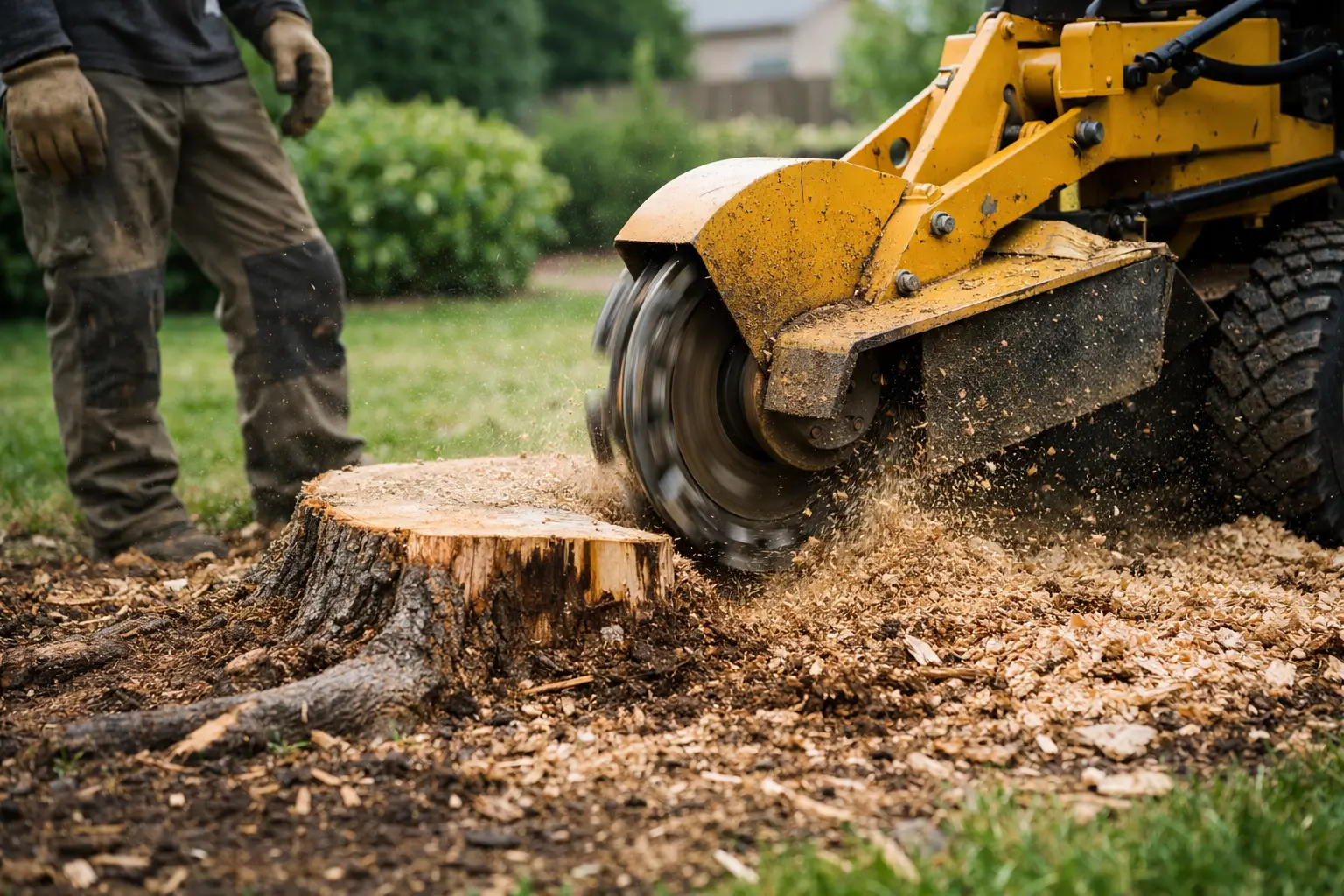
The tree is down, the limbs are hauled off, and the yard looks better - until that stump is still sitting there like a knee-high reminder of the whole job. That is why stump grinding after tree removal matters. For most homeowners, leaving the stump behind turns a finished project into a half-finished one.
A leftover stump is more than an eyesore. It gets in the way of mowing, attracts sprouts in some cases, and can create a tripping hazard for kids, guests, or anyone walking the yard after dark. If the tree was close to a driveway, fence, patio, or foundation bed, the stump can also make the area harder to use and harder to clean up properly.
Why stump grinding after tree removal is usually worth it
Most homeowners ask the same basic question once a tree comes down: do I really need to deal with the stump right now? Fair question. The answer depends on your plans for the yard, the stump location, and the size of the tree.
If the stump is tucked far back in a natural area and you do not care how it looks, you may decide to leave it for a while. But in most residential yards, that choice causes more frustration than savings. Stumps sit right where you want clean access, usable lawn, or a fresh planting area. They also tend to stand out more after the rest of the tree is gone.
Grinding is usually the most practical option because it removes the visible stump without tearing up the whole yard. Full stump removal means digging out the stump and major roots, which is much more invasive. For a typical home property, grinding gets the job done with far less disruption.
What stump grinding actually does
Stump grinding does not pull the root system out of the ground. Instead, a stump grinder chews the stump down into wood chips below grade. In most cases, the goal is to grind deep enough so the area can be covered with soil, leveled out, and either seeded, sodded, or mulched.
That matters because many homeowners expect the entire root system to disappear. It will not. The larger roots remain underground and break down gradually over time. For most yards, that is completely fine. Once the stump is ground down, you get back a cleaner, safer surface without the cost and mess of excavation.
How deep the crew grinds depends on what you want to do next. If you simply want the stump gone and the area cleaned up, standard grinding is often enough. If you plan to replant grass or improve the grade, deeper grinding may make sense. If you want to build directly over the spot or plant another tree in the exact same location, the conversation changes because the old roots and remaining chips can affect that plan.
When to schedule stump grinding after tree removal
In many cases, the best time is right after the tree removal job. The crew is already there, access is already set up, and the cleanup can be handled in one pass. That is usually the simplest route for the homeowner and often the most efficient route for the job.
Still, there are situations where waiting makes sense. If the ground is saturated, if access is tight after heavy rain, or if other landscape work is about to happen, the stump can be ground later. Some homeowners also remove a tree for safety reasons first and deal with the stump once they have room in the budget.
There is no universal rule that says it has to happen the same day. But waiting too long usually means living with a hazard and an unfinished-looking yard longer than necessary.
What affects the price
Stump grinding is one of those services where the details matter. Two stumps can look similar at a glance and be very different in labor, machine access, and cleanup time.
The size of the stump is the biggest factor, but not the only one. Diameter, root flare, wood hardness, and how close the stump is to structures all affect pricing. A stump in open lawn is usually simpler than one tucked beside a fence line, wedged near a retaining wall, or sitting close to utilities.
Access is a major factor on residential jobs. If a machine can roll straight into the backyard through a standard gate, that is one thing. If the stump is behind a narrow side yard, near delicate hardscape, or boxed in by pool equipment and garden beds, the work gets slower and more technical.
Cleanup also matters. Some homeowners want the chips left behind for mulch. Others want full haul-off and the area raked clean. Neither option is wrong, but they are not the same amount of work.
A fair quote should account for the actual conditions on site, not just a rough guess over the phone. That is especially true when the stump sits in a tight residential space where property protection matters as much as speed.
What to expect on the day of service
A good stump grinding job should feel organized, not chaotic. The crew should confirm access, protect surrounding areas as needed, and make sure the machine path does not create unnecessary damage to lawn, edging, or nearby structures.
Once the grinder starts, the stump is cut down in layers until it is below the target depth. The wood chips and grindings are then managed based on the scope of the job. Sometimes they are left in a neat pile or tamped back into the hole. Sometimes they are hauled off so the area can be backfilled with soil.
There is always some disturbance because this is heavy equipment doing real work. But there is a big difference between normal job impact and sloppy execution. On a residential property, details matter. Driveways, fences, irrigation lines, and landscaping should not be treated like they are disposable.
That is one reason many homeowners prefer an insured company that is used to tight-space work around homes. Douglas Tree Service ATX, for example, handles residential jobs where controlled access and full cleanup are part of the standard, not an upgrade.
Common concerns homeowners have
One of the biggest concerns is whether the stump will grow back. Some species are more aggressive about sprouting than others. Grinding usually solves the visible stump problem, but occasional sprouts can still appear from remaining roots depending on the tree type. If that happens, they are generally much easier to manage than a full stump.
Another concern is whether the yard will be left with a big crater. A proper grinding job should not leave a dangerous hole. The area may settle a bit over time, especially as chips break down, so adding topsoil later is normal. That is not a sign that something went wrong. It is just part of how the material decomposes.
Homeowners also ask about replanting. Grass is usually no problem once the area is prepped correctly. Planting a new tree in the exact same spot is less ideal. The remaining roots, old chips, and limited fresh soil can make that harder than expected. If you want another tree, shifting the location a bit is often the better move.
Should you leave the stump instead?
Sometimes, yes. If the stump is deep in a back area, you are trying to save money in the short term, and it does not affect how you use the yard, leaving it may be acceptable for now.
But for front yards, side yards, play areas, and spots near walkways or driveways, leaving the stump usually creates an ongoing annoyance. You mow around it. You stare at it. You explain it to guests. Eventually, most homeowners end up removing it anyway.
That is why stump grinding after tree removal is often the cleanest finish to the job. It restores the space and lets you move on.
A better yard starts when the job is actually finished
Tree removal solves the immediate problem, but the stump is what keeps the space from feeling usable again. If you want the yard to be safer, easier to maintain, and ready for whatever comes next, grinding is usually the step that gets you there.
The best approach is simple: get a straight answer, make sure the quote reflects real site conditions, and choose a crew that treats your property with care from start to cleanup. When the stump is gone and the area is cleaned up properly, the whole yard feels finished again.
Texas Tree Authority Hub
Official Texas resources we trust.